The question
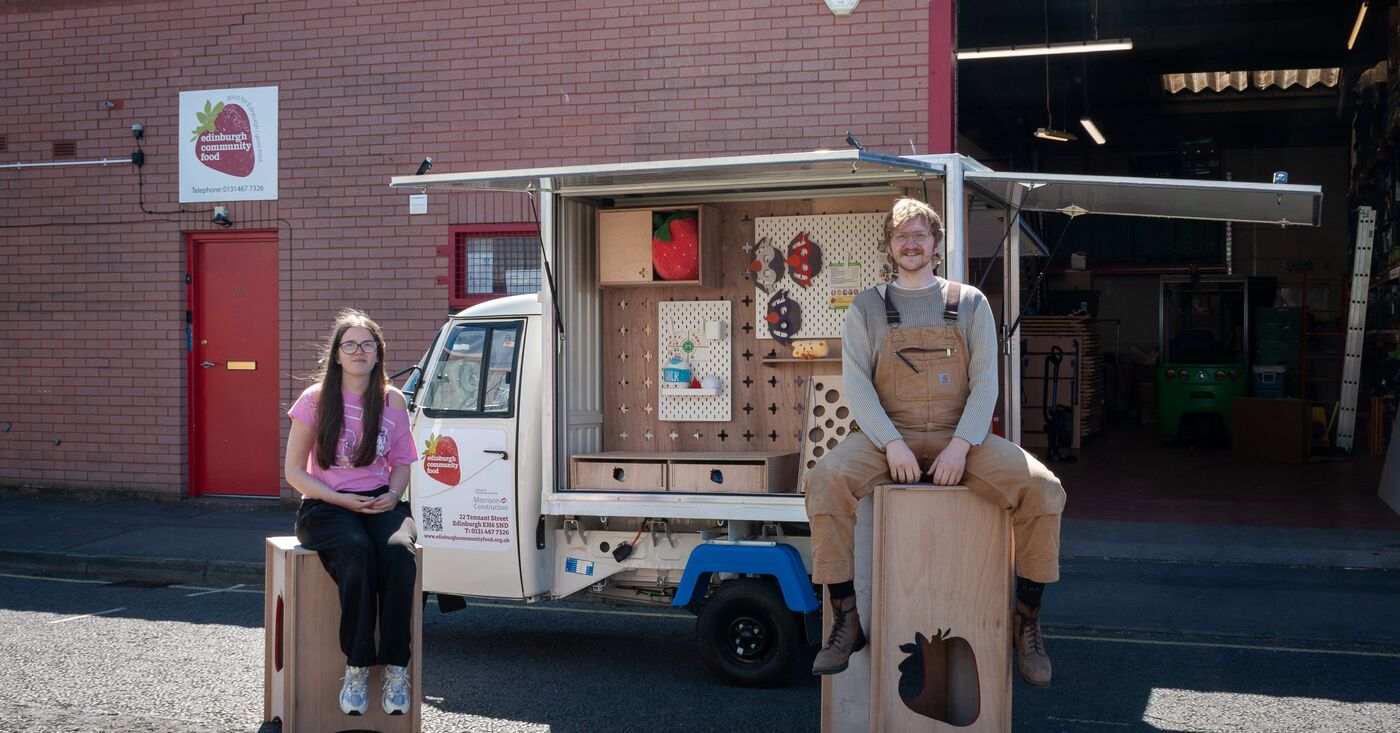
Edinburgh Community Food had a tuk-tuk with nothing in it. They wanted a food classroom that could turn up where families already are, at school gates, community centres and the market on Leith Walk, rather than asking people to come to them. Children growing up with tight budgets rarely get the chance to play with food, make a mess and get it wrong. How do you make that space fun, dignified, and small enough to drive?
Who was in the room
We spent fifteen weeks with ECF, working as a pair with fellow Napier designer Lana Craig. We helped out at ECF’s Discover! family cooking sessions in Sighthill, watched how kids play with exhibits at the National Museum of Scotland, and borrowed from people who knew more than us. Dr Tom Flint on playful learning, storyteller Fergus McNicol on narrative, Jonny Pang on furniture, Andy Johnston on timber, JJ at Edinburgh Open Workshop on CNC. Brenda, Karen and Jo at ECF shaped every pitch.
A story first
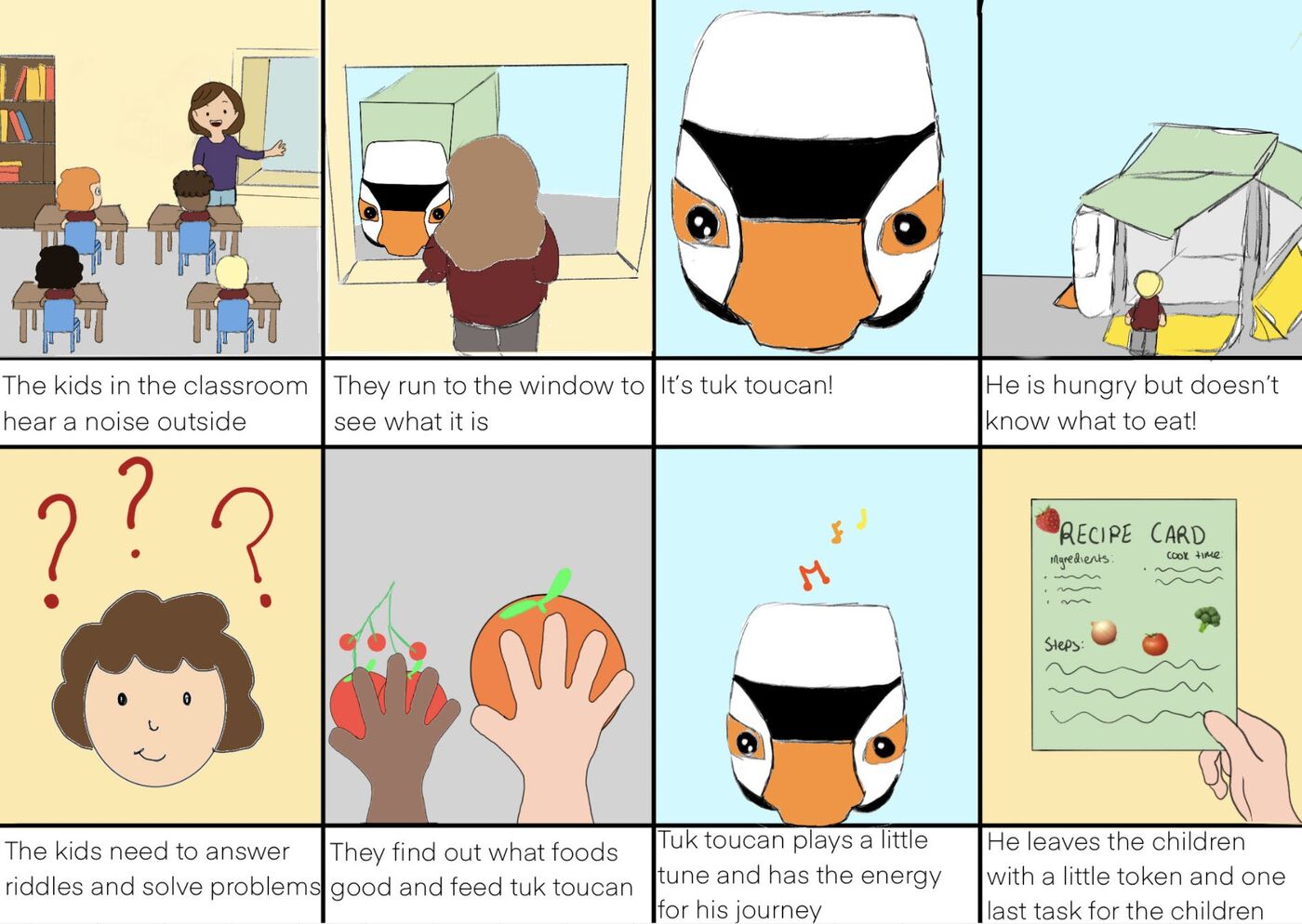
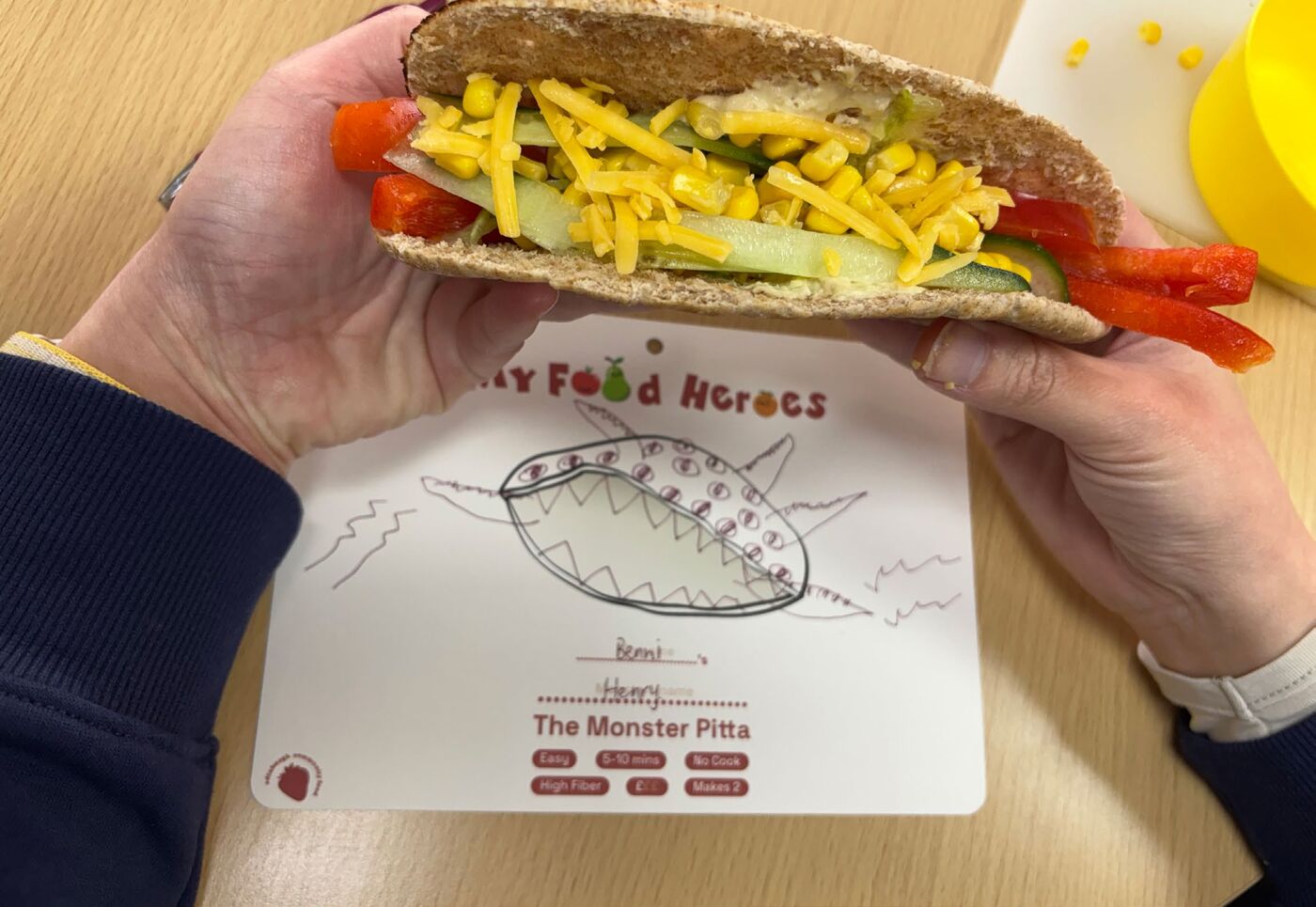
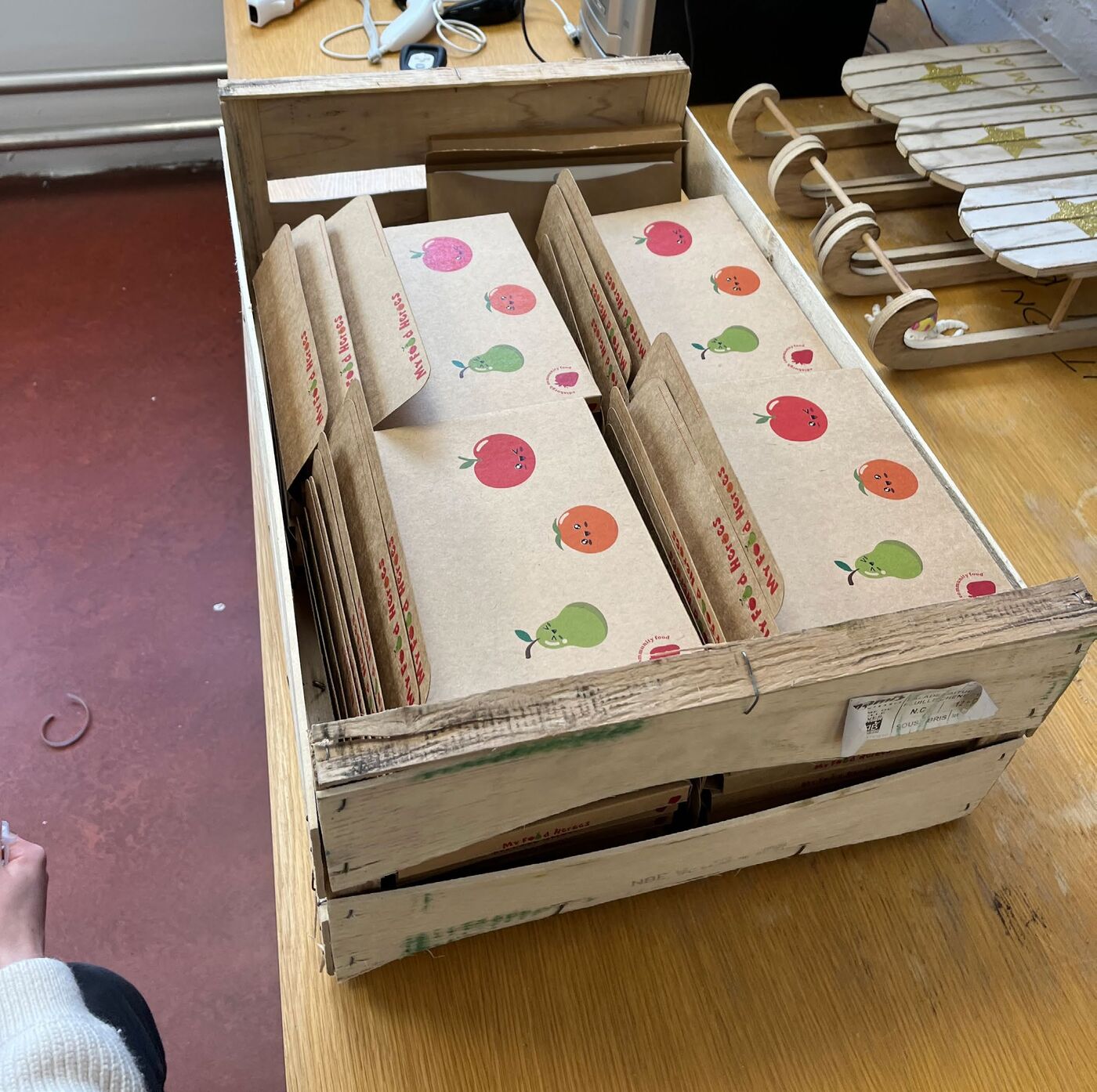
Before cutting any wood, we tested the idea with a class of P3 and P4s. Printed recipe sheets had fallen flat in earlier sessions, so instead each child got a blank My Food Heroes card, invented a monster through a fill-in-the-blanks prompt, then built it as a pitta at their own pace. They guarded their cards all session and took them home to show their parents. Jo, who leads ECF’s workshops, told us she’d been sceptical until she saw how absorbed they were. That gave us our lead character, a toucan who needs children to sort out his food so he can fly home.
Working it out at full size
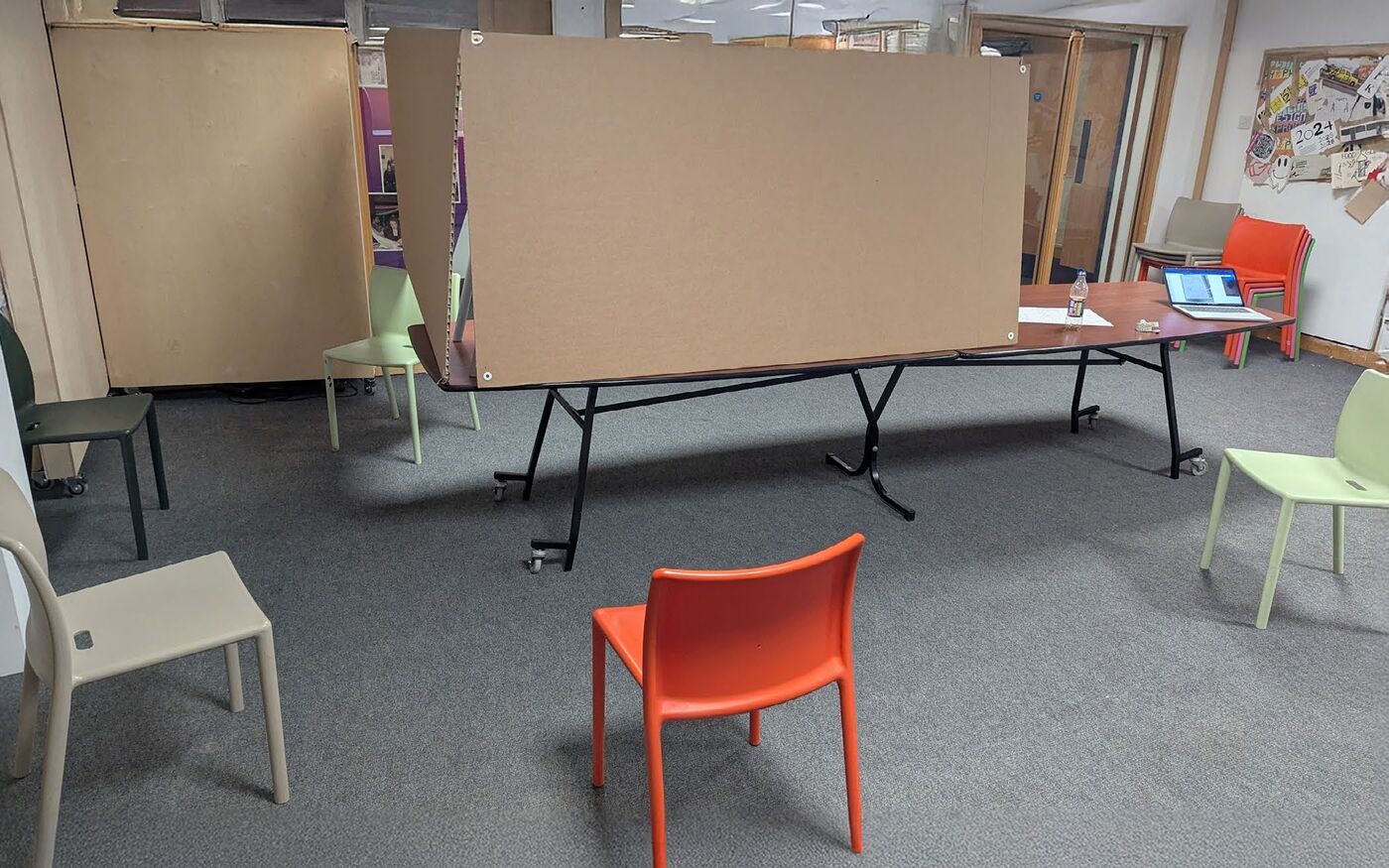
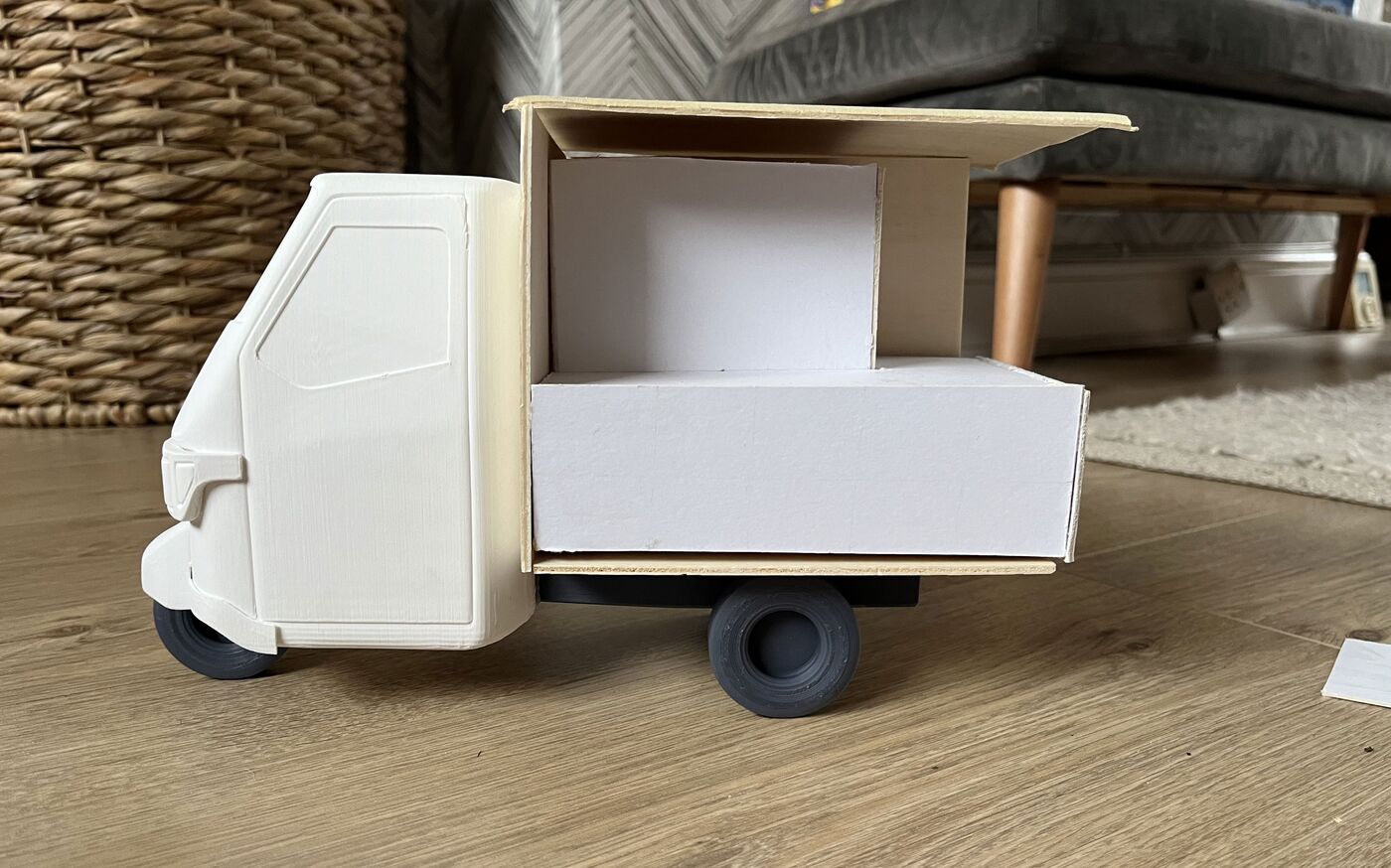
We built the tuk-tuk’s walls out of cardboard and knelt down beside them, which showed us that only the bottom 50 cm is really in reach of a small child. A 1:12 model with dollhouse furniture turned out to be the best way to talk ideas through with ECF, much easier to read than a CAD drawing. We set ourselves a target of fifteen children through the whole thing in 25 minutes, so a class of thirty could take part within one lesson, with whoever runs the tuk-tuk standing at one door and keeping everyone in view.
What we made
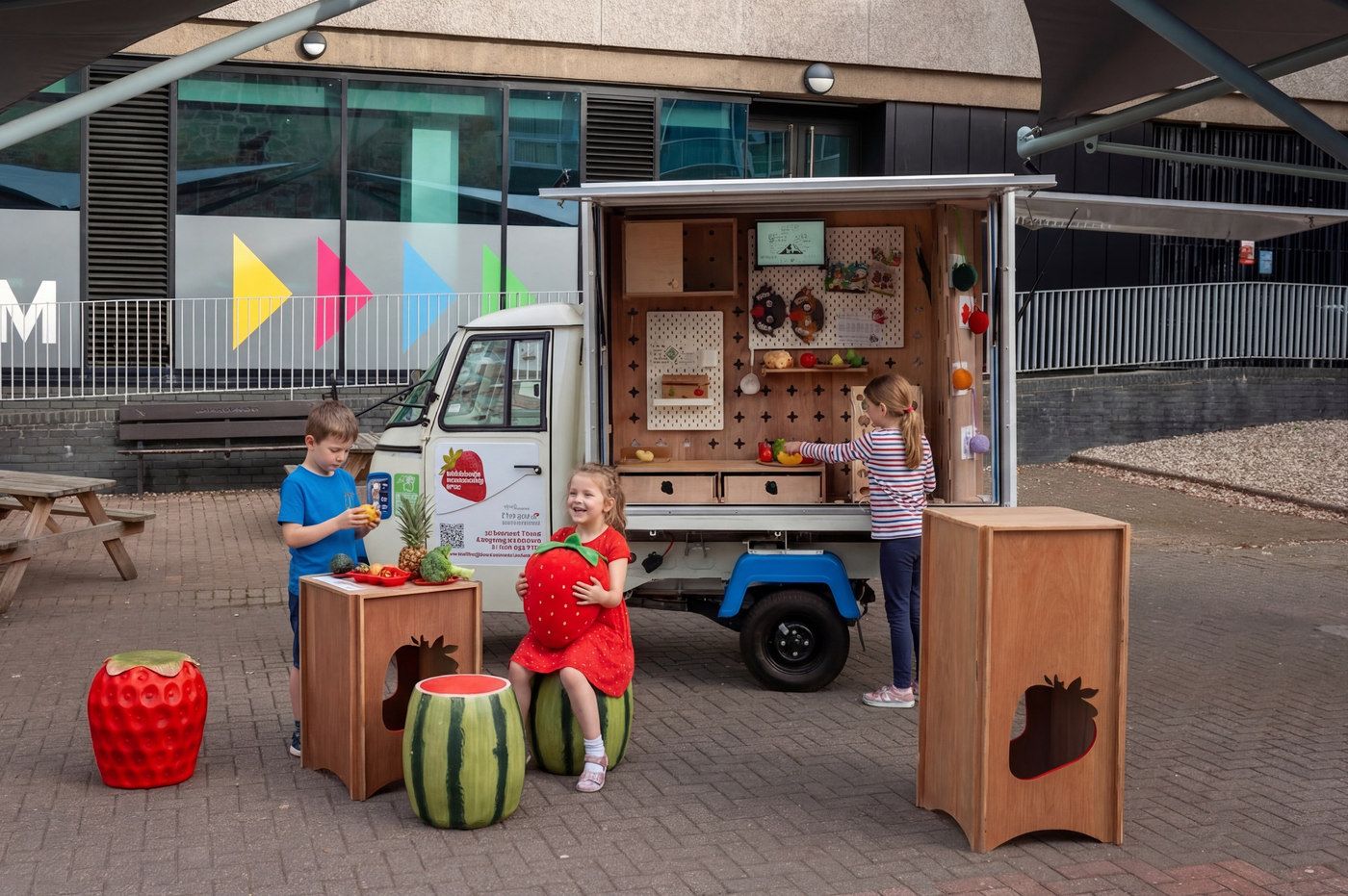
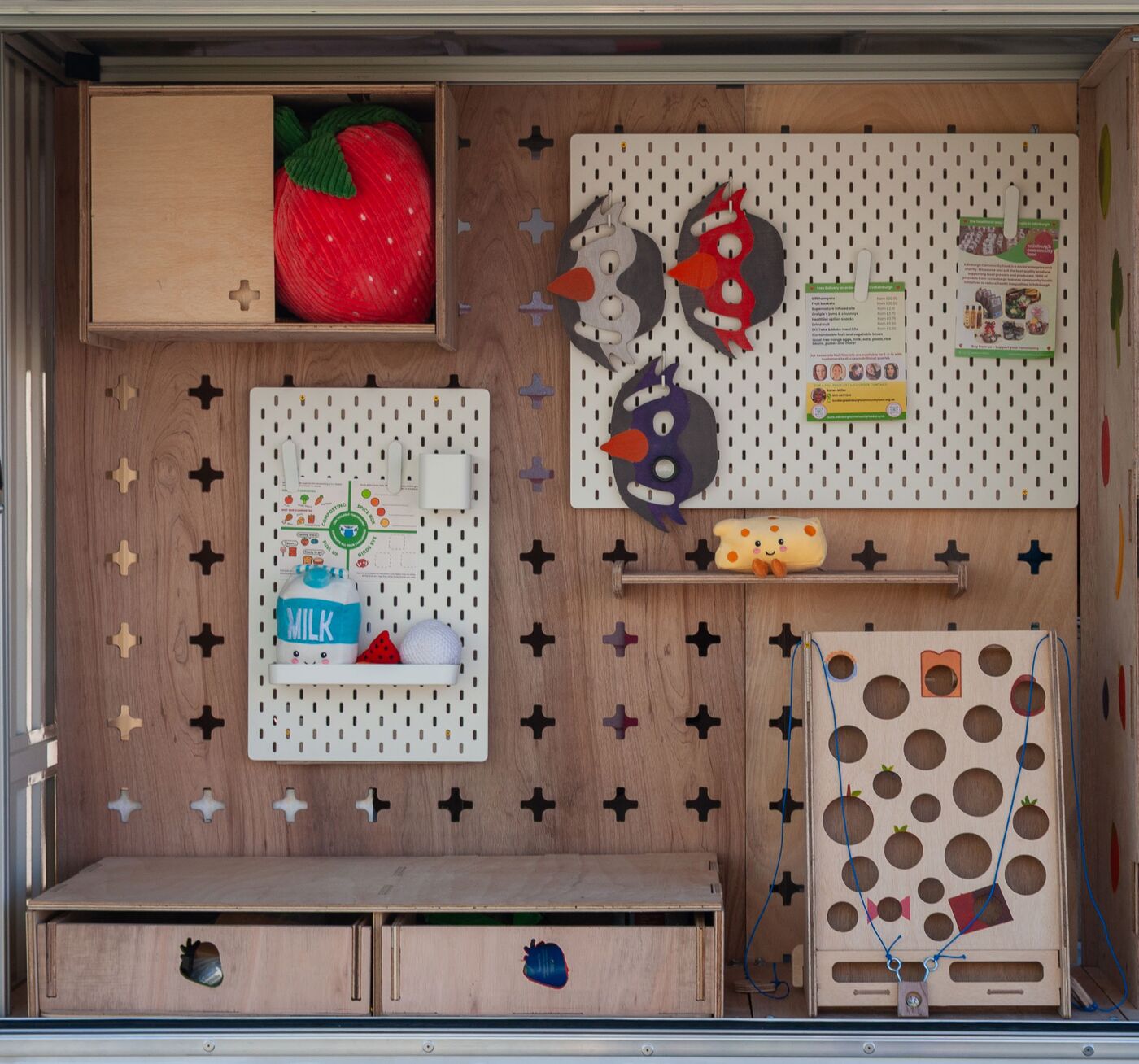
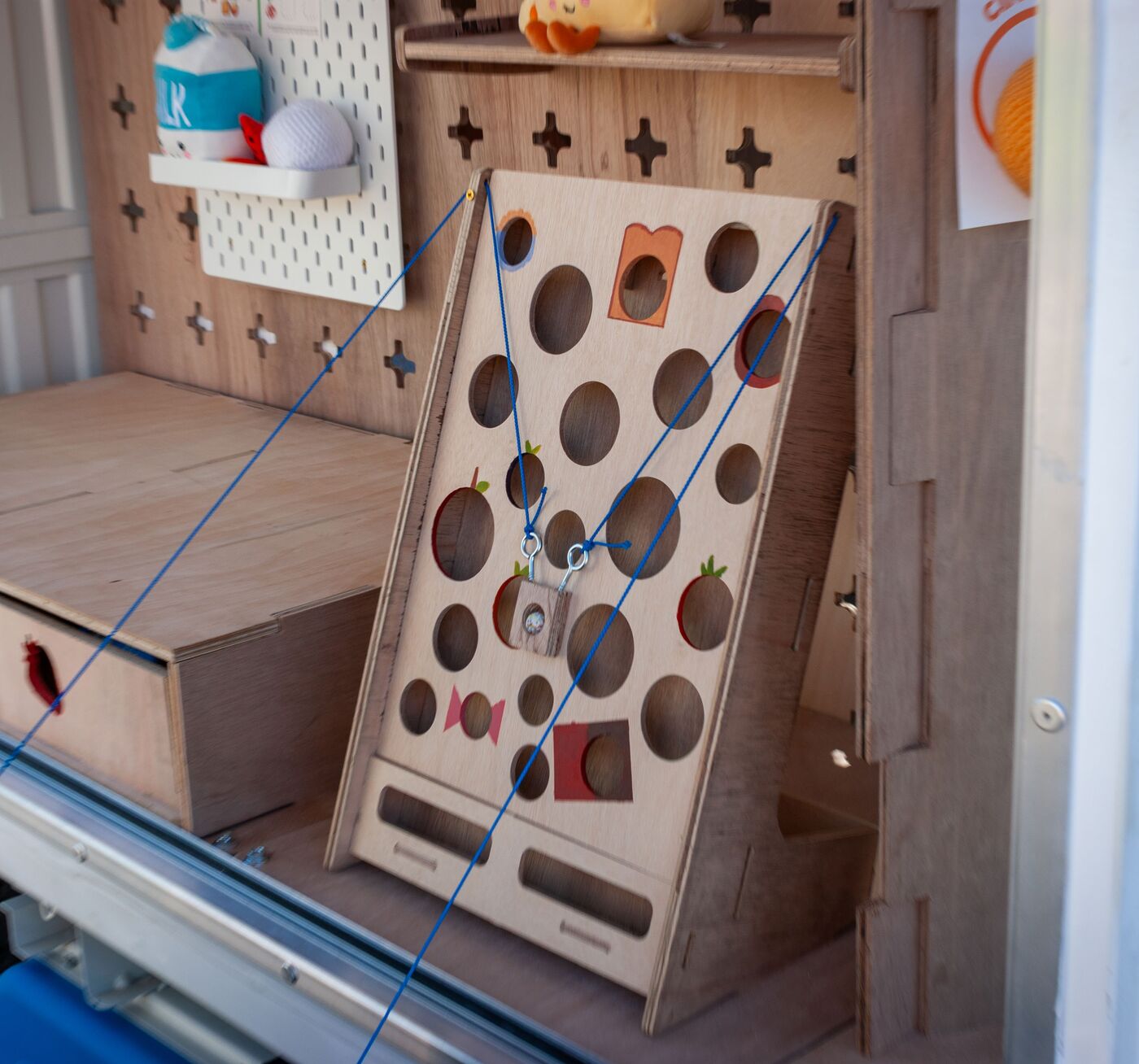
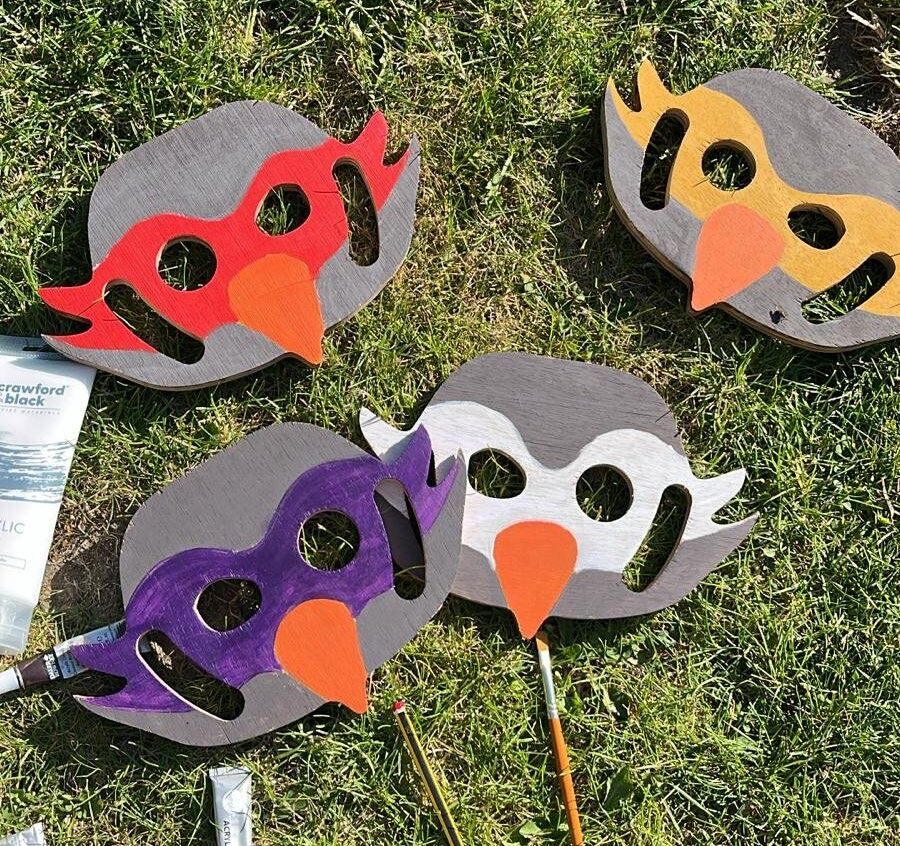
An aluminium frame bolted to the tuk-tuk’s bed, holding six marine plywood modules that slide in and out. There’s a basketball game for sorting plush veg into the right basket, a marble run about saving your energy for later, a wall of crocheted spice balls to smell, drawers that double as a worktop, pegboards, and fold-flat plinths that open the stall out onto the pavement. Bird masks with magnifying loupes let kids look at food up close. Halfway through, ECF told us they’d use it as a market stall as much as a classroom, so we redrew the plan around modules that swap at short notice. Everything flat-packs, and most of the games work off the tuk-tuk too.
Making it
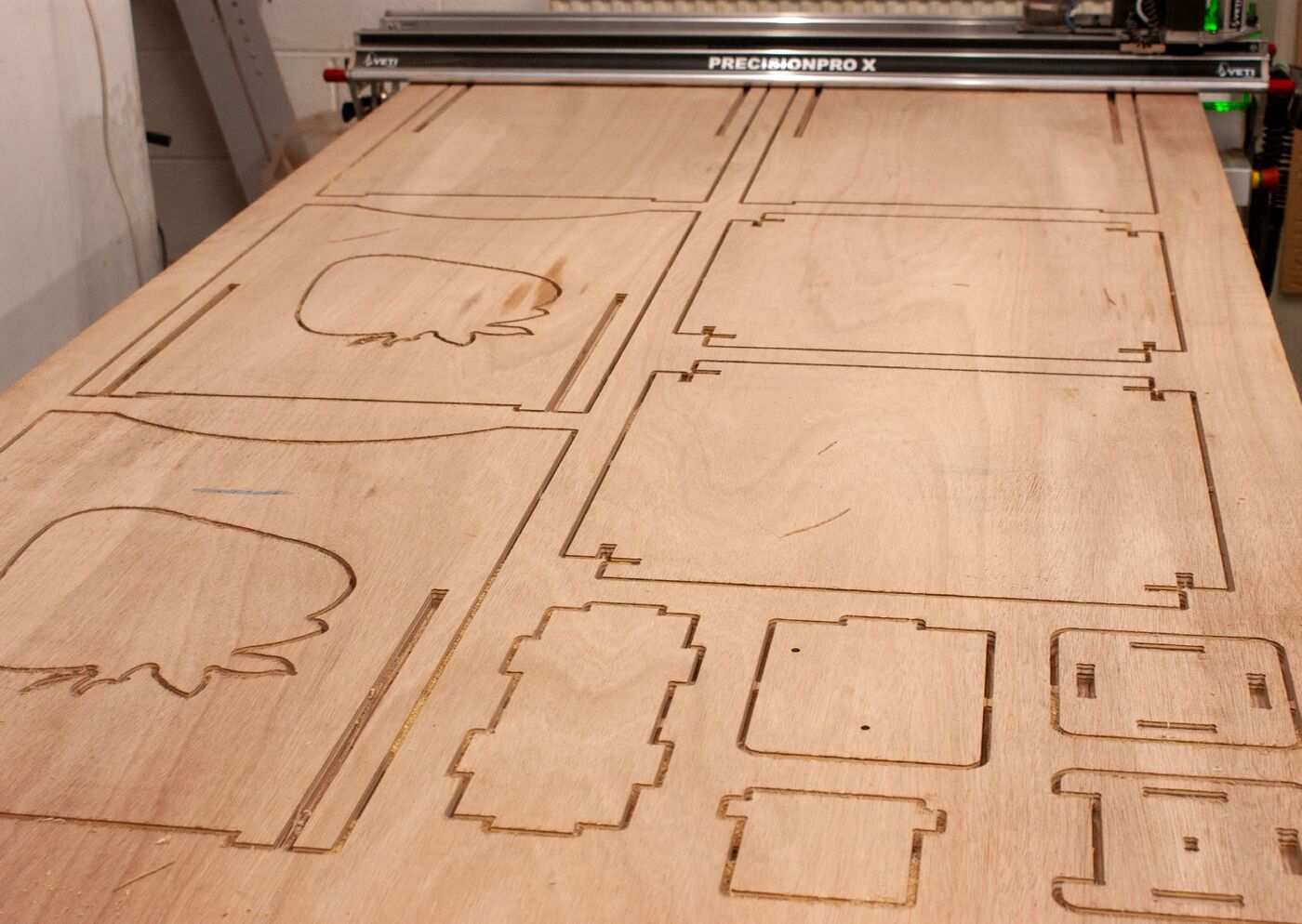
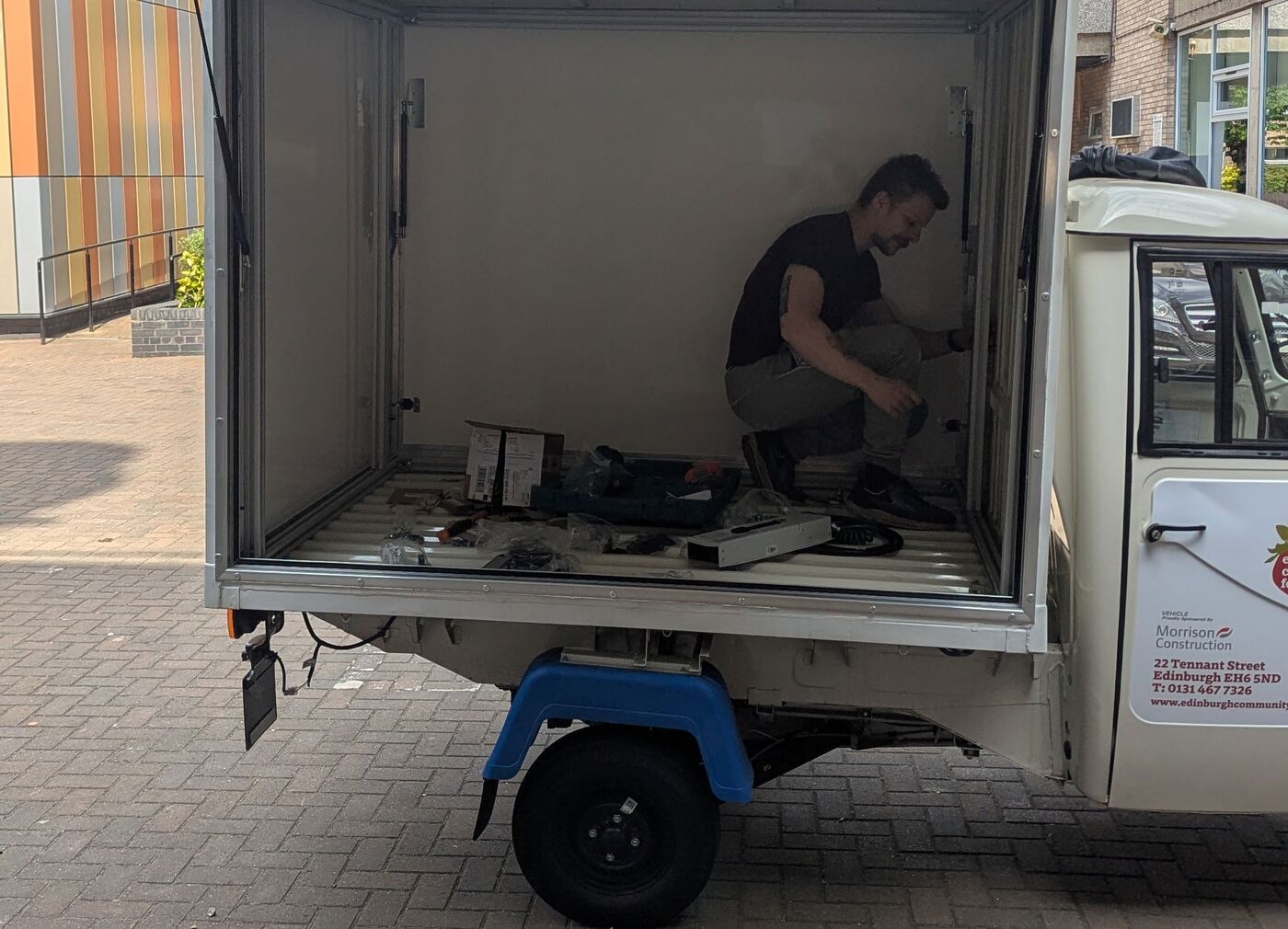
We cut the frame to fit in Napier’s metal workshop, measuring against the tuk-tuk itself, because it wasn’t quite square. The plywood came off the CNC at Edinburgh Open Workshop, then got sanded, painted and sealed at ECF’s warehouse. We also wrote illustrated, IKEA-style manuals so ECF’s team can rearrange, repair or add modules without needing us.
What lasted
[Where has the tuk-tuk been since? Schools, markets, events.] The relationship lasted too. In summer 2026 we went back to ECF for a research sprint inside their community food market, which has grown into a marketing and brand sub-group working towards a new website in January 2027.